
Backup power for inns and lodges: the guests are already here
Egress lighting lasts about ninety minutes on battery, and a wedding does not reschedule. How Berkshire innkeepers and lodging owners think about standby power.
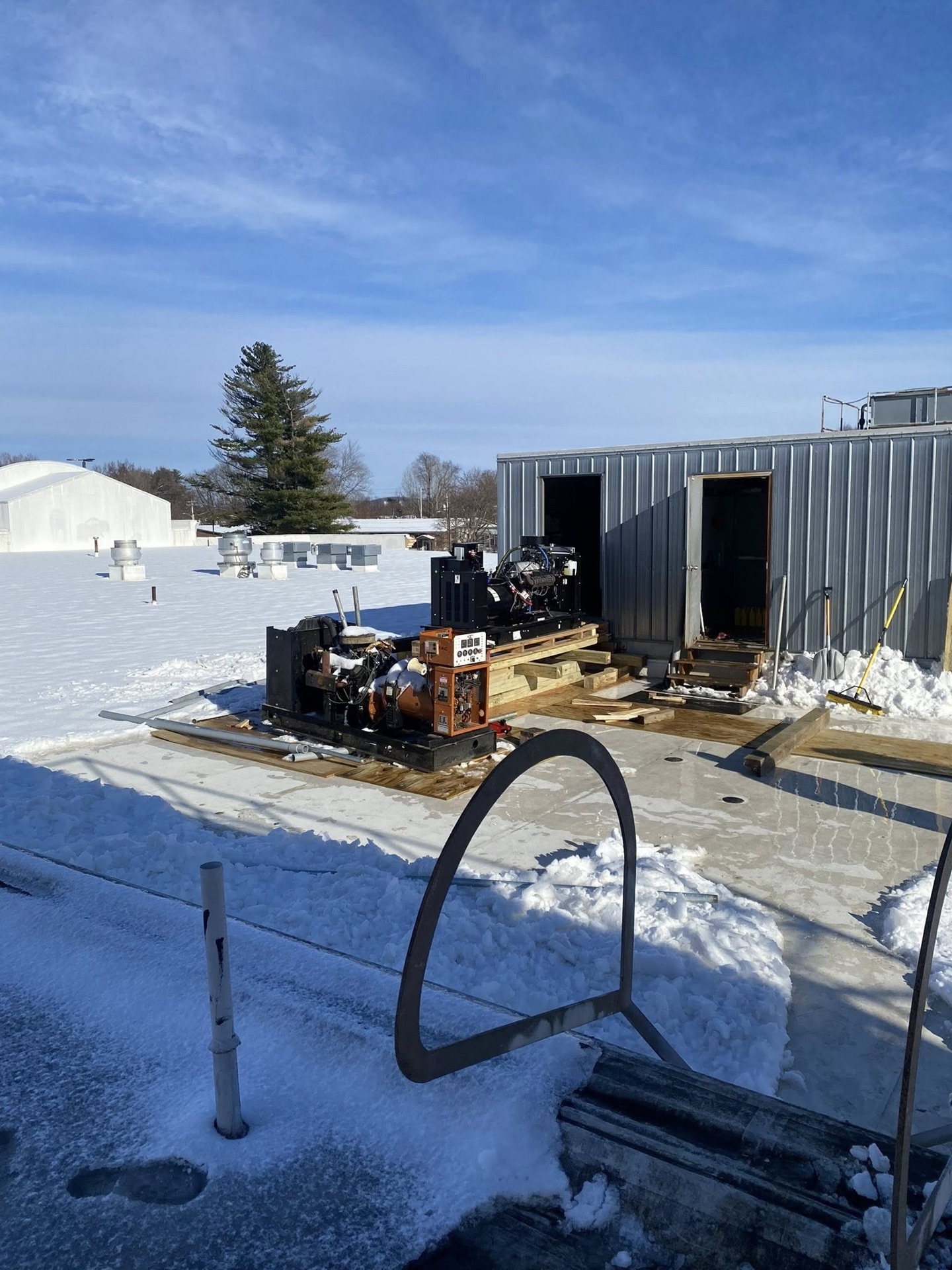
Berkshire lodging runs most of the year. Tanglewood fills the summer, the leaves fill October, the ski hills and the holidays carry the winter, and wedding season overlaps all of it. So when the power fails on a Saturday night, the difference between an inn and a house is simple: the house holds people who chose to be there and can wait it out. The inn holds people who paid for the weekend, and a wedding party does not reschedule.
Overnight is the hard part
A daytime outage at a lodging property is an inconvenience. Overnight is another matter. Code requires emergency egress lighting, but those battery packs are sized for evacuation; figure roughly ninety minutes before the hallways go dark. The fire panel carries a bigger battery, sized for about a day. Once the corridor lights die you are walking the halls with a flashlight, deciding whether to wake guests.
Heat is the second problem, and in January it is the first. A guest wing that loses heat at 10 p.m. is uncomfortable by midnight and a refund by morning. And for the rural properties, which is most of the character lodging in this county, there is the well pump. No power means no water, which means no toilets and no showers for twenty rooms of guests who were promised a nice weekend.
Breakfast still has to happen
Most inns are also restaurants at 8 a.m., and the kitchen runs on the same arithmetic as any commercial kitchen: the walk-in holds a few hours, the reach-ins hold less, and nothing cooks without hood exhaust. Add the laundry, the septic pumps where the property has them, and the sump pumps under the older buildings, and a lodging property carries more quiet electrical dependencies than almost any other small business.
Sizing a property instead of a house
The good news is that backing up an inn rarely means backing up everything. The core list is heat, water, the kitchen, egress and corridor lighting, the fire panel, and enough room circuits that guests can charge a phone and read in bed. A commercial installation sized to that core is a much smaller machine than one sized to the whole nameplate of the property.
Placement matters more at an inn than anywhere else we work. A generator exercises weekly and runs for hours during an outage, and it should do both somewhere a paying guest cannot hear it through a window. Many properties already have large propane storage for the kitchen and the heat, which simplifies fuel; where there are multiple buildings or cottages, we plan the priority building first and the rest as budget allows.
Winter is when it pays for itself
The quietest version of the payoff has no guests in it at all. A heated building that loses power during a February cold snap is a pipe freeze waiting on a timer, and a burst pipe in a guest wing is a renovation. The generator that keeps the boiler running through a three-day outage protects the building itself, occupied or not.
We design, install, and service standby systems for lodging properties across the county. The useful first step is a walkthrough: an hour with the panel, the well, the kitchen, and the floor plan, and you will know what the machine needs to be and what it does not.
Talk to a real person.
Same-day callbacks, family-owned since 1991. We will answer the question your house is actually asking.