
Standby or portable? Choosing backup power for a New England home
Standby versus portable generators in New England. Cost, fuel, runtime, and which one actually fits your house after a week-long outage, from the Andrus crew.
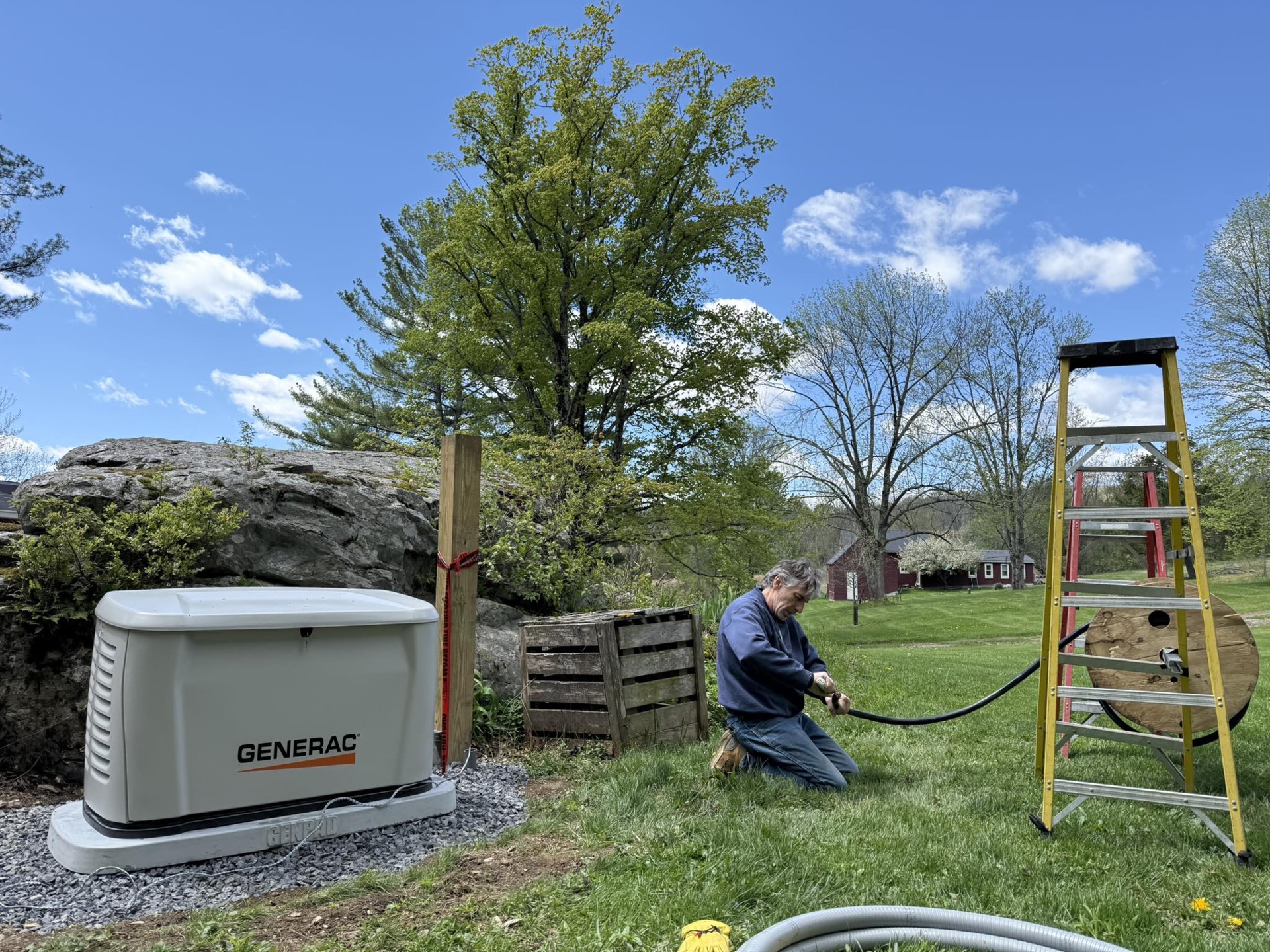
Nobody in New England needs convincing that the power goes out. The October 2011 snowstorm dropped heavy, wet snow on trees that still had their leaves, and parts of western Massachusetts sat dark for most of a week. The 2008 ice storm did the same to the hilltowns. Outages here are weather, and weather is manageable if you are set up for it. The question is which setup fits your house, and the answer is not always the expensive one.
We sell and service standby generators for a living, and we will still tell you: some households are better served by a portable. Here is how we walk people through the choice.
Where a portable earns its keep
A decent portable generator costs between $500 and $1,500. Wired into the house through a manual transfer switch or interlock kit, a job any licensed electrician can do in an afternoon, it will carry a refrigerator, lights, the boiler, and a handful of circuits. If you are usually home when storms come through and comfortable wheeling a 150 pound machine out of the garage in bad weather, that is a legitimate setup. We say so on sales calls.
Two habits make a portable useful instead of a headache. Run it outside, well away from windows and doors, every time. And feed the house through a transfer switch rather than a tangle of extension cords, so hardwired loads like the boiler get covered. Gasoline is the third consideration: it goes stale, so the cans need stabilizer and rotation, and when the whole county loses power the gas stations are dark too. People around here remember that one from 2011.
What a standby does that a portable cannot
A standby generator starts itself. That single fact carries most of its value. When the grid drops, the transfer switch moves the house to generator power in seconds, whether you are in the kitchen, at work, or two hours away in the city. Plenty of south county houses sit empty for weeks at a stretch in winter. For those houses the generator’s job is keeping the heat on and the pipes intact in an empty building, and only a machine that starts itself can do that job.
The other advantages stack from there. A standby runs on the propane tank or the gas main, so there is no fuel to haul or store. It carries the whole panel, well pump and septic pump included, where a portable forces you to pick a short list of circuits. It exercises itself weekly and reports its own faults. And it does all of this without anyone standing in the sleet holding a pull cord.
What they cost
A standby is a five figure project, and anyone who waves that away is selling something. An installed air-cooled standby for a typical home, with the pad, the wiring, the fuel connection, and the permit, generally lands in the low five figures, and the exact number depends on the run from the tank and the state of your electrical panel. Financing spreads that out, and you should budget a few hundred a year for maintenance, because a machine that must start in February deserves an oil change.
Against that, the portable setup runs $1,500 to $2,500 all in, plus fuel and your own labor every time it runs. Cheaper, and it should be. It does less, and it does nothing by itself.
How we would decide
Three questions sort almost everyone. Are you reliably home when the weather turns? Can someone in the house safely move and start a heavy machine in the dark, in the snow? And does the house depend on electricity for water, heat, or medical equipment? If your answers point toward away, no, and yes, you are a standby household. If they point the other way, a portable and a transfer switch will serve you well, and we would rather tell you that now than sell you a machine you did not need.
There is also a middle path while you decide: we rent generators, including for outages, so a long storm does not have to force the decision for you.
Either way, the time to choose is a calm afternoon with the lights on. Request a callback and we will give you the same answer we would give a neighbor, because around here that is usually who is asking.
Talk to a real person.
Same-day callbacks, family-owned since 1991. We will answer the question your house is actually asking.