
What happens during a generator service visit
Oil, valves, battery, and transfer switch. What a factory-trained technician checks during a twice-a-year standby generator service visit in the Berkshires.
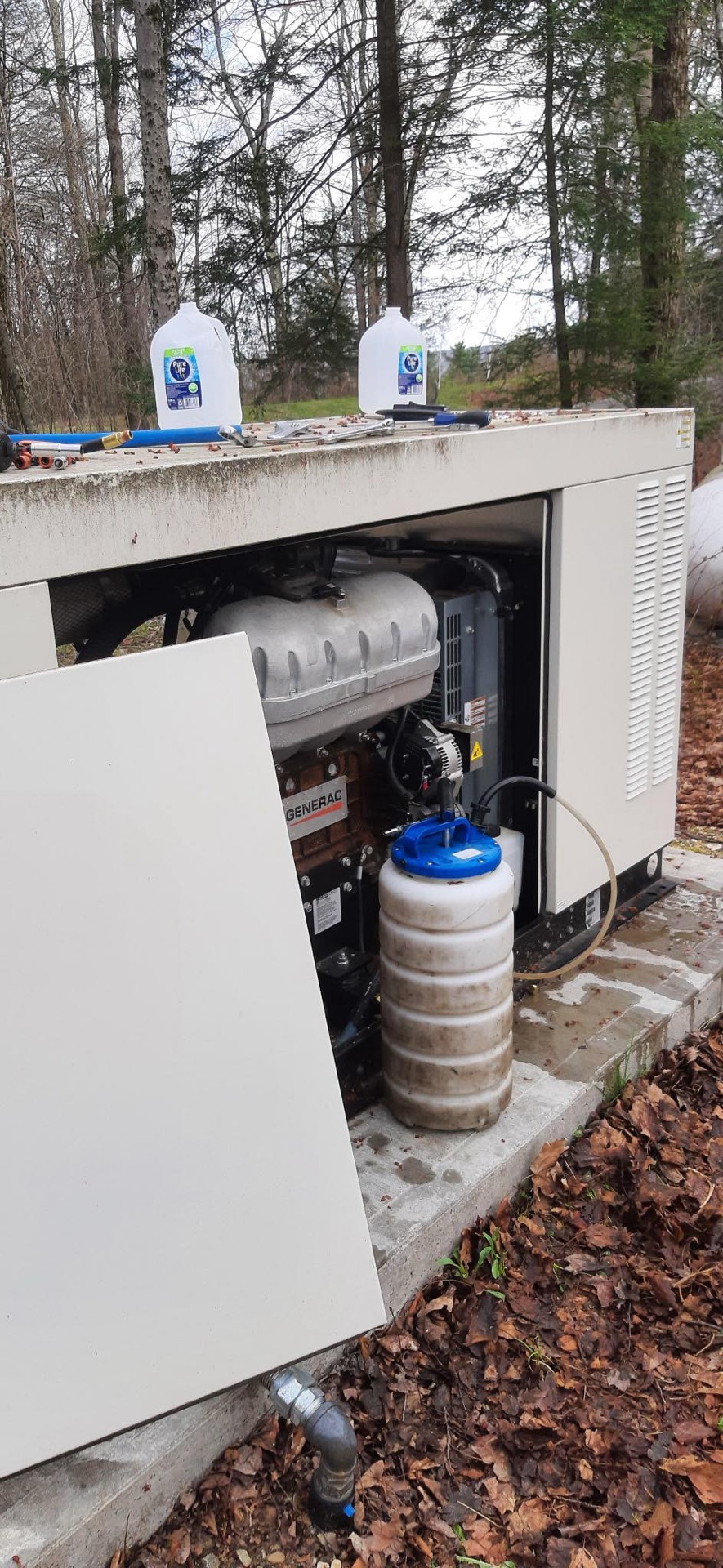
A standby generator has a strange job. It sits outside through August humidity and January cold, runs five minutes a week, and is expected to start on the worst day of the year and then run flat out for as long as it takes. Machines do not stay ready on their own. Readiness is built twice a year, by hand, with a service binder and a set of feeler gauges. Here is what a visit covers.
The work itself
The oil comes first. The air-cooled engines on most residential standbys hold about two quarts, and under load they work hard for their size, so oil and filter get changed on the calendar, even after a quiet year. We run synthetic rated for cold starts, because the engine’s hardest moment all year is turning over below zero.
The air filter tells stories. Mice love a warm enclosure, and it is not rare to open a unit in spring and find a winter’s worth of acorns stacked against the housing. The filter gets replaced, the enclosure gets cleared, and any chewed insulation gets flagged before it becomes a no-start. Spark plugs come out, get read, and get gapped or replaced.
Valves are the quiet one. On air-cooled engines the valve clearance drifts with hours and heat, and loose valves are a classic cause of hard starting. Setting them takes patience and a feeler gauge, and it is the kind of work that separates a real service visit from a guy who tops off the oil and leaves.
Then the electrical side. Most no-starts trace back to the battery, same as cars, so we load test it instead of glancing at the voltage. A battery can read a healthy 12.6 volts on a mild afternoon and still fold at zero degrees, because cold cuts cranking power just when thick oil demands more of it. We exercise the transfer switch, inspect the contacts, confirm the weekly self-test schedule, and read the controller’s fault history, which remembers things homeowners never noticed.
Winter is the exam
Everything above aims at one moment: a cold start in the middle of a storm, with the house asleep and nobody watching. The other thing that moment requires is air. A generator breathes hard when it runs, and a nor’easter can drift snow right over the intake louvers. We set units on raised pads with clearance around them, but mid-winter the shoveling is yours: keep the machine clear the same way you keep the dryer vent and the furnace intake clear.
Between visits
None of it takes a mechanic. Keep snow, leaves, and grass clippings away from the enclosure. Know which day the unit exercises, and notice when you stop hearing it. If a status light comes on, call while the weather is quiet. And keep the propane fill comfortably ahead of storm season, since the generator shares the tank with the house.
We run maintenance plans with two visits a year, residential and commercial, whether or not we installed the unit. The crew is small enough that the tech who installed a machine is often the one back servicing it, which is how we like it: the person kneeling at your generator in October has a stake in it starting in January.
Talk to a real person.
Same-day callbacks, family-owned since 1991. We will answer the question your house is actually asking.